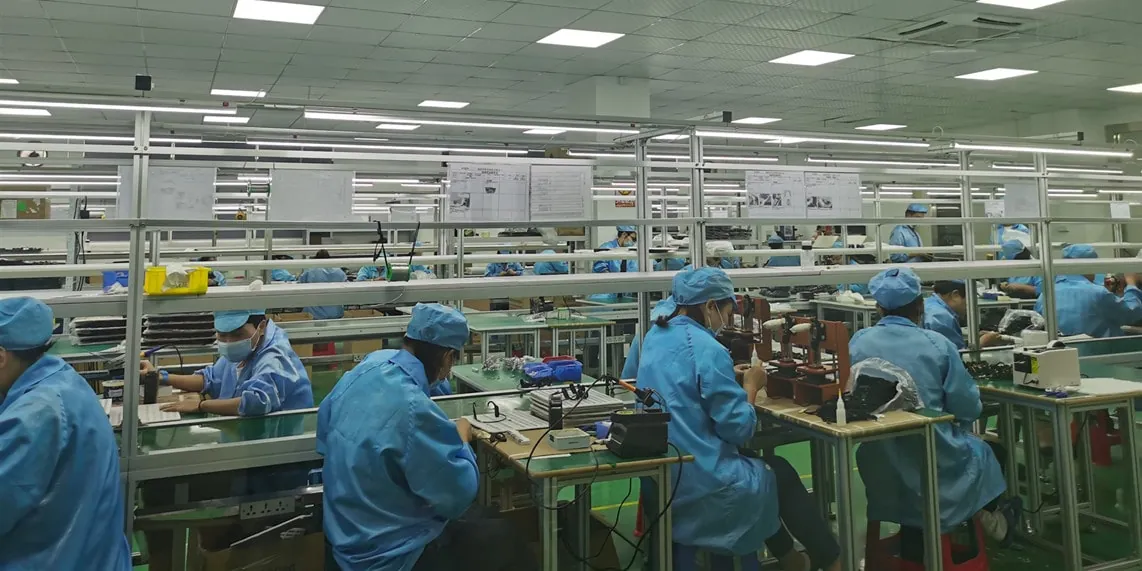
Power Supply Burn-In Testing: Why 24 Hours Matters
Written by engineers at the Daxpoo factory, Shenzhen · · 4 min read
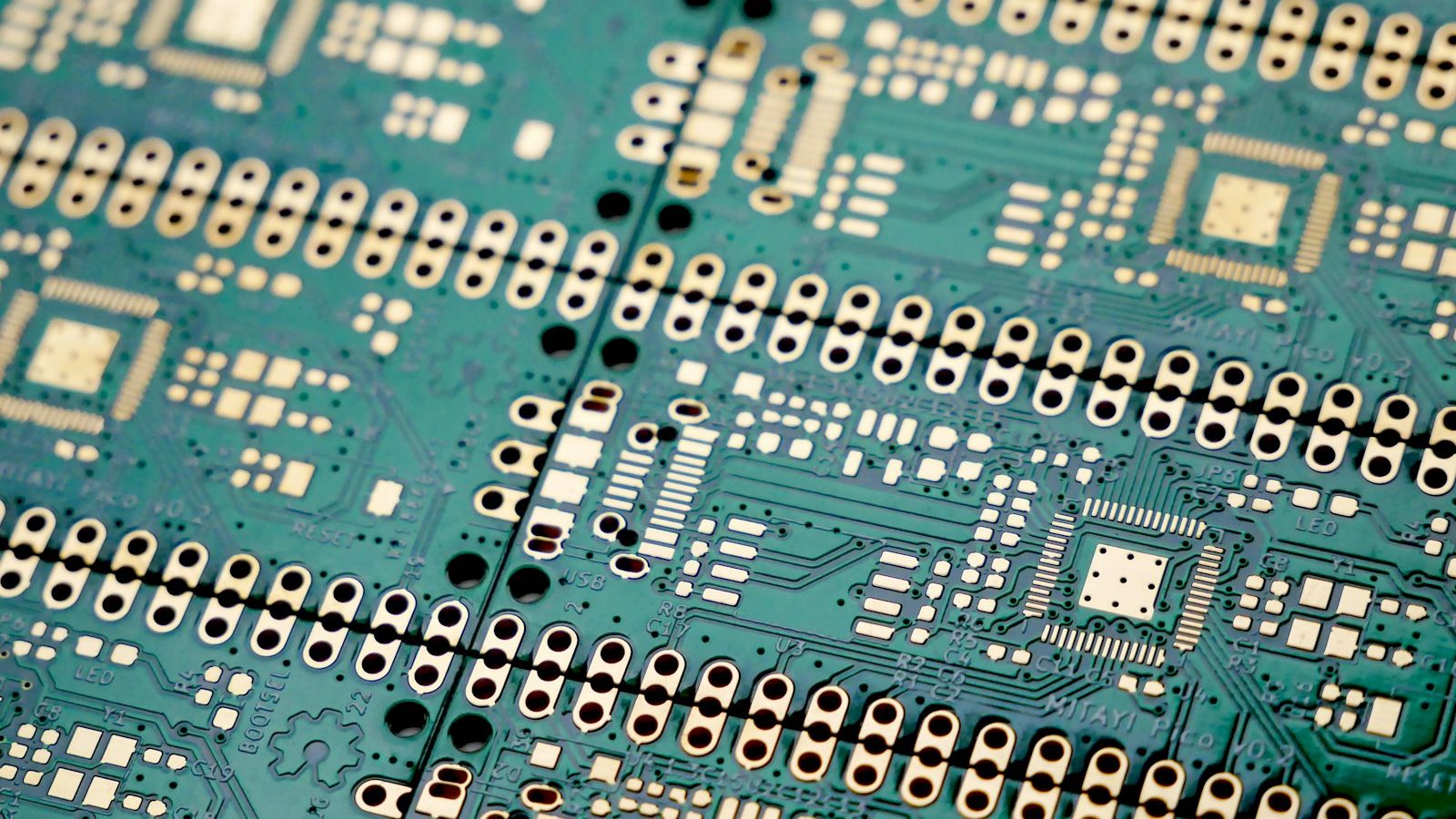
When buyers visit our factory, the burn-in room is usually the area they remember most: thousands of adapters plugged into racks, all running at once, each with a small indicator light. It looks simple. It is also one of the most effective quality steps in power supply manufacturing. This article explains what burn-in is, why we run it for 24 hours and what you should ask any supplier about it.
The failure curve: why new products fail early
Electronic products tend to follow a “bathtub curve”. Failure rates are higher at the very start of life, then drop to a low, steady level for most of the product’s useful life, and rise again as components wear out.
The early failures come from manufacturing defects that pass a quick functional test: a cold solder joint, a weak capacitor, a hairline crack in a component, a transformer with marginal insulation. These units work on day one and fail in week three, in your customer’s hands.
Burn-in moves those early failures from your customer to the factory floor.
How burn-in works
- Finished adapters are plugged into burn-in racks.
- Each output is connected to a load, typically at or near rated output.
- The room or chamber is kept at an elevated ambient temperature to accelerate any weakness.
- Units run for a set time while the system monitors output.
- Any unit that drops out, overheats or drifts out of specification is removed and analysed.
- Survivors are re-tested before packing.
What burn-in catches
- Electrolytic capacitors with poor quality or damage
- Cold or cracked solder joints that open up when heated
- Semiconductors with latent defects
- Transformer insulation weaknesses
- Thermal problems from incorrect assembly
- Intermittent connections in the cable or DC plug
Why 24 hours?
Some factories burn in for one or two hours, some only sample a few units per batch, and some skip it entirely. Short burn-in catches gross defects but misses failures that need a few heat cycles to show up. We run every adapter for 24 hours under load because it catches the large majority of early-life failures while keeping production practical. It takes rack space and time, which is why it is often the first step cut in a price-driven factory.
Burn-in is one of three checkpoints
Burn-in works best as part of a complete quality system:
- Incoming inspection of components before they reach the line
- In-line testing: output voltage, ripple, protection functions and hi-pot on every unit
- Burn-in and final test before packing
You can see how these fit together on our factory page.
Questions to ask any supplier
- Is every unit burned in, or only a sample?
- How long, at what load, and at what ambient temperature?
- Is output monitored during burn-in, or only checked afterwards?
- What is the typical fall-out rate, and what happens to failed units?
- Can I see the burn-in area on a video call?
A supplier who cannot answer these clearly is probably not doing it consistently. For a complete list of what to check, read our checklist for choosing a laptop adapter manufacturer.
Burn-in versus other reliability tests
Burn-in is often confused with other tests. Each has a different purpose:
| Test | Applied to | Purpose |
|---|---|---|
| Burn-in | Every production unit | Remove early-life failures before shipping |
| Hi-pot (dielectric strength) | Every production unit | Confirm insulation between mains and output |
| HALT | New designs, a few samples | Find design weaknesses by stressing beyond limits |
| HASS | Production samples | Screen production using limits learned from HALT |
| Temperature and humidity | Design verification samples | Check performance in harsh environments |
| Drop test | Design verification samples | Check housing and internal fixing |
What the numbers look like in practice
Fall-out during burn-in is usually small, often well under one percent in a stable process. That small number matters. On an order of 5,000 adapters, even half a percent is 25 units that would otherwise have failed at your customers, each one a return, a replacement and a possible bad review.
Trend data matters too. A sudden rise in burn-in failures is an early warning of a bad component batch, and lets the factory stop and investigate before an entire order is affected.
How to verify burn-in on a video call
- Ask to see racks loaded with your model or a similar one, not an empty room.
- Look for load connections on every output and a monitoring system.
- Ask how units are labelled with start time and rack position.
- Ask to see the log of failed units for the last week.
A factory that runs burn-in seriously is usually proud to show it.
Burned in before it ships
Every laptop charger, LED power supply and USB-C charger we ship has run for 24 hours under load first. Ask for a factory quote through our quote form, or arrange a video tour of the burn-in room.
Frequently asked questions
What is a burn-in test for power supplies?
Burn-in means running finished power supplies under load, often at elevated temperature, for a set period before shipping. It screens out units with weak components that would otherwise fail early in the field.
How long should a power adapter be burned in?
Practices vary from a few hours to a full day. We run every adapter for 24 hours under load, which catches most early-life failures in capacitors, solder joints and semiconductors.
Does burn-in reduce the life of a power supply?
A properly designed burn-in uses normal operating conditions and takes only a tiny fraction of the product’s rated life. Its purpose is to remove weak units, not to wear out good ones.